


UmK Biocars
For the project United Micro Kingdoms I was invited by Anthony Dunne and Fiona Raby to develop a form study for the Biocars using bacterial cellulose. This became an early attempt to grow bacterial cellulose directly into three-dimensional forms.
The works are part of their vision of extremely light, low-energy, organically grown vehicles, each customised to its owner’s dimensions and needs. Bioliberals regarded the use of huge amounts of energy to overcome gravity and wind resistance as counterproductive and primitive — faster is no longer better. The Biocars combine two technologies: anaerobic digesters that produce gas, and fuel cells that use the gas to produce electricity. Bags of uncompressed gas cannot compete with the efficiency of fossil fuels, a fuel based on millions of years of preparation compared to one that takes hours or days.
The works are part of their vision of extremely light, low-energy, organically grown vehicles, each customised to its owner’s dimensions and needs. Bioliberals regarded the use of huge amounts of energy to overcome gravity and wind resistance as counterproductive and primitive — faster is no longer better. The Biocars combine two technologies: anaerobic digesters that produce gas, and fuel cells that use the gas to produce electricity. Bags of uncompressed gas cannot compete with the efficiency of fossil fuels, a fuel based on millions of years of preparation compared to one that takes hours or days.
Commissioner:
Dunne & Raby
Places:
London, Schmalkalden
Year:
2013
Tasks:
Process design, realisation
Topics:
Bio design, fermentation, mobility, energy
Project website: unitedmicrokingdoms.org
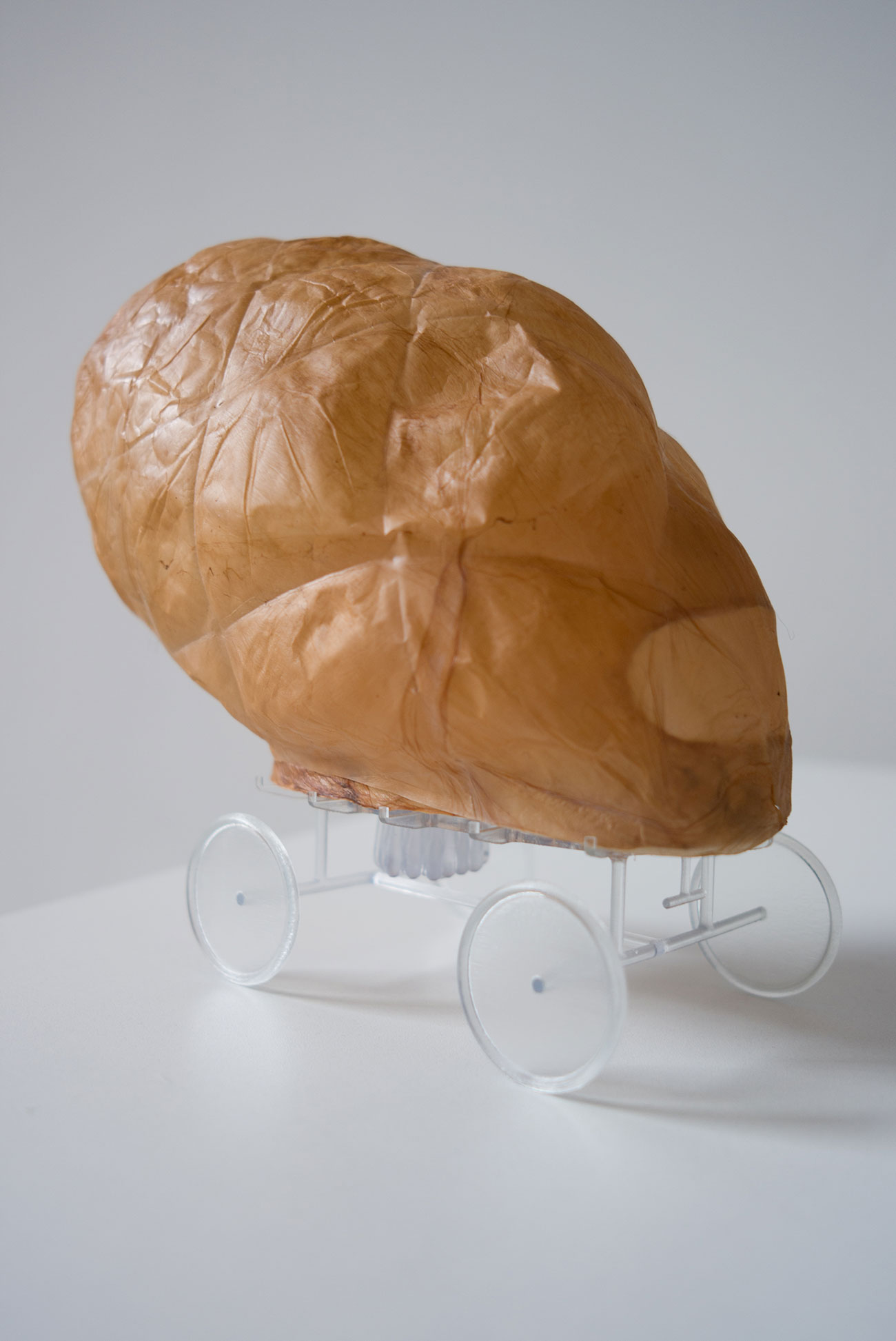
Biocar #01, Photo: Dunne & Raby
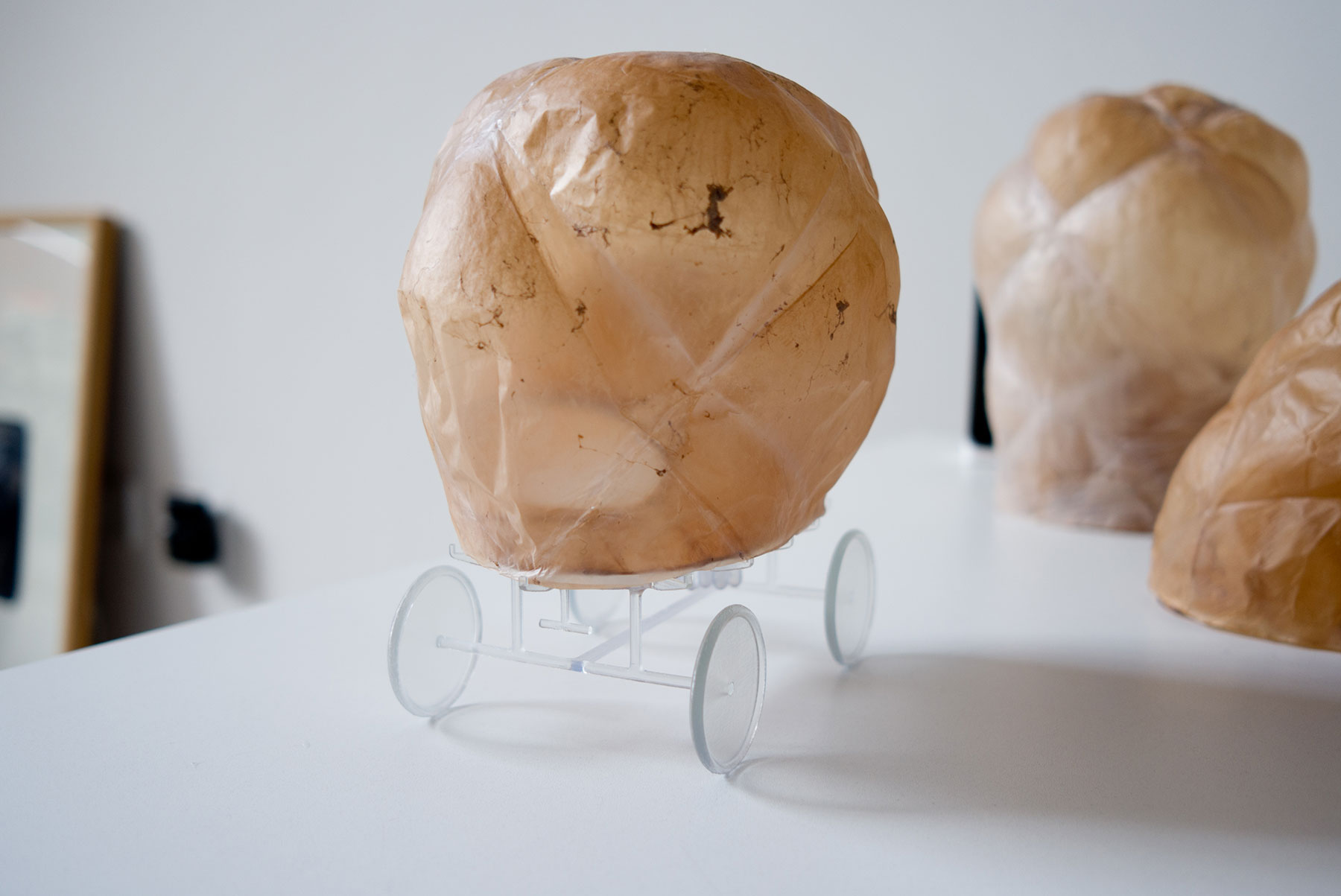
Biocar #02, Photo: Dunne & Raby
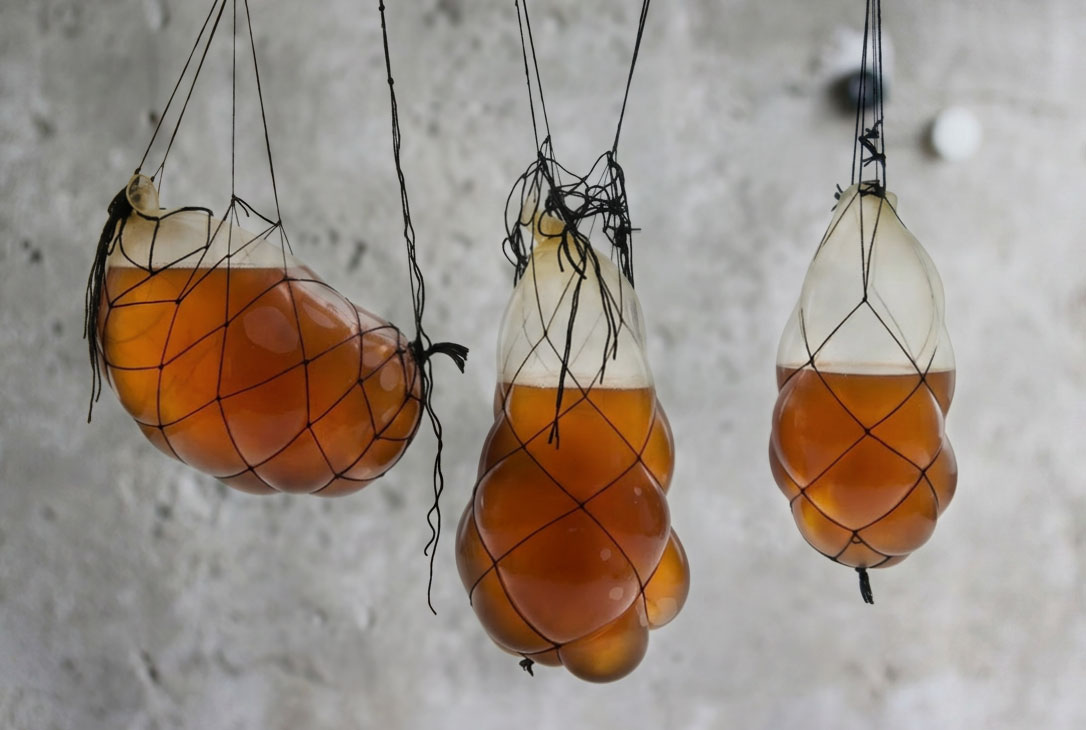
Growth process of the biocar covers, Photo: Stefan Schwabe
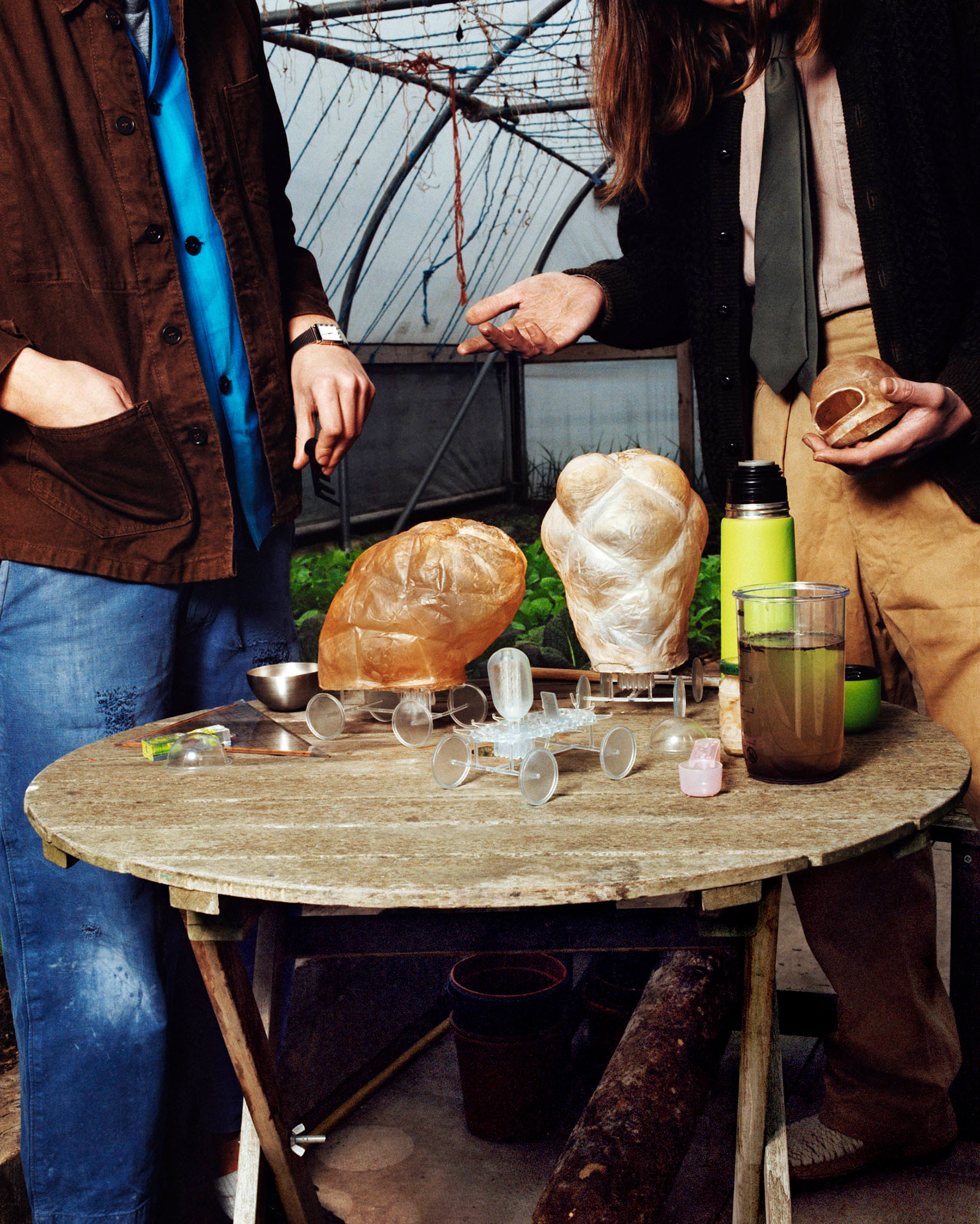
Biocar scenario, Photo: Jason Evans